
Looking for Dependable Medical Office and Healthcare Facility Cleaning in North Jersey?
Cleanliness is of greater significance in a medical office or healthcare facility than in an ordinary commercial building. Patients expect the environment to look clean and well-maintained, but appearance is only part of the responsibility.
Healthcare properties must also manage frequently touched surfaces, patient turnover, cross-contamination risks, sensitive information, specialized rooms, and facility-specific infection-prevention procedures.
That is why medical office and healthcare facility cleaning should not be treated as standard office janitorial work with a few additional disinfecting steps. Effective cleaning requires a carefully defined scope, appropriate products, consistent procedures, trained personnel, and close coordination with facility management.
Spotless Group provides customized medical office cleaning services and healthcare facility cleaning services throughout North Jersey. Each cleaning program is developed around the facility type, operating hours, patient volume, flooring and surface materials, priority areas, and internal cleaning requirements.
Why Healthcare Facility Cleaning Requires a Specialized Approach
Routine janitorial services generally focus on keeping a workplace orderly, presentable, and comfortable. Common responsibilities may include emptying waste containers, vacuuming carpets, cleaning restrooms, mopping floors, dusting surfaces, and maintaining common areas.
Those fundamentals remain important in a medical setting, but they are only the beginning. Medical offices and healthcare facilities regularly serve patients who may be ill, recovering from medical procedures, living with chronic conditions, or especially vulnerable to infection.
Staff members move between patient rooms, administrative spaces, waiting areas, restrooms, and shared workstations throughout the day. Visitors may also touch doors, counters, furniture, elevator controls, check-in equipment, and other common surfaces.
As a result, healthcare facility cleaning requires closer attention to:
- High-touch surfaces
- Patient-facing areas
- Cleaning and disinfection procedures
- Cross-contamination prevention
- Product selection and contact times
- Room-to-room cleaning sequences
- Personal protective equipment
- Waste-handling boundaries
- Patient privacy
- Quality control and documentation
- Communication with facility management
The Centers for Disease Control and Prevention recommends paying particular attention to high-touch surfaces in patient-care areas and ensuring that environmental cleaning personnel follow established cleaning and disinfection procedures.
A professional cleaning company does not replace a healthcare provider’s infection-prevention program. Instead, it supports that program by consistently and correctly carrying out clearly assigned environmental cleaning responsibilities.
Medical Office Cleaning Versus Routine Janitorial Services
A well-run janitorial program can keep a conventional office clean, but healthcare environments require a more deliberate, controlled approach.
In a standard workplace, the primary goals often include visual cleanliness, employee comfort, orderly shared spaces, waste removal, and the preservation of floor and furnishings condition.
In a medical office, the cleaning program must address the same priorities while also considering where patients receive care, how often rooms turn over, which surfaces are most frequently touched, and which responsibilities fall to clinical staff rather than cleaning personnel.
For example, a general office cleaner may wipe a reception counter as part of a nightly cleaning routine.
A medical office cleaning program may need to identify the counter as a frequently touched patient-facing surface, establish an approved cleaning and disinfection procedure, determine how often it requires attention, and account for nearby electronic devices, paperwork, and check-in equipment.
Medical office and healthcare facility cleaning may also require:
- Approved disinfectants for specific surfaces
- Separate tools for restrooms and patient areas
- Defined procedures for exam rooms
- More frequent high-touch-point cleaning
- Clear rules for handling spills or questionable materials
- Special precautions around sharps containers
- Greater awareness of confidential patient information
- Written service specifications and inspection procedures
The difference is not simply that healthcare facilities need “more cleaning.” They need a cleaning program tailored to the facility’s risks, activities, responsibilities, and operating procedures.
Cleaning, Sanitizing, Disinfecting, and Sterilizing Are Different Processes
The words cleaning, sanitizing, disinfecting, and sterilizing are sometimes used interchangeably, but they do not mean the same thing.
Cleaning
Cleaning physically removes soil, dust, spills, organic matter, and other debris from a surface. It may not kill every microorganism, but it removes material that can interfere with a disinfectant’s effectiveness. In many situations, a visibly dirty surface must be cleaned before it can be properly disinfected.
Sanitizing
Sanitizing reduces certain microorganisms to levels acceptable under applicable public health requirements. The term is commonly associated with food-contact environments, although sanitizing products may have other approved uses.
Disinfecting
Disinfecting uses a registered product to kill or inactivate specified microorganisms on a surface. The product must be appropriate for the surface and used according to its label instructions. Applying disinfectant and immediately wiping it away may not provide the intended result.
The surface generally needs to remain visibly wet for the full contact time stated on the label. The Environmental Protection Agency notes that when a product has a specified contact time, the treated surface should remain visibly wet for that entire period.
Sterilizing
Sterilization is a specialized process designed to eliminate all forms of microbial life. It is generally used for medical instruments and other items that require a higher level of processing.
Environmental cleaning personnel should not represent ordinary surface disinfection as sterilization. Instrument sterilization, clinical equipment reprocessing, and other regulated medical procedures typically remain the responsibility of appropriately trained healthcare personnel.
Understanding these distinctions helps prevent gaps in the cleaning program and avoids unrealistic claims about what commercial cleaning services can accomplish.
Preventing Cross-Contamination During Medical Office Cleaning
Cleaning can unintentionally spread contaminants when the same tools, cloths, gloves, solutions, or procedures are used across multiple areas.
For example, using a restroom cloth on a reception counter or carrying a soiled mop from one room into another may transfer contaminants rather than remove them. Even a well-intentioned cleaner can create problems if the work is not organized properly.
Cross-contamination prevention may include:
- Designating separate tools for restrooms and patient areas
- Using color-coded microfiber cloths
- Changing microfiber cloths and mop heads at appropriate intervals
- Avoiding repeated dipping of dirty cloths into the clean solution
- Following a consistent room-to-room sequence
- Cleaning higher surfaces before lower surfaces
- Addressing cleaner areas before more contaminated areas
- Removing gloves correctly and performing hand hygiene
- Keeping clean supplies separate from used materials
- Never returning unused supplies to clean storage after contamination
CDC healthcare cleaning guidance emphasizes following an organized cleaning sequence and generally working from cleaner areas toward more contaminated areas.
The specific procedures should be based on the facility’s layout and risk profile. A detailed cleaning plan helps workers understand where to begin, which tools belong in each area, what must be changed between rooms, and which situations should be reported to a supervisor.
Proper Disinfectant Use Is Essential
A disinfectant is only effective when it is suitable for the intended use and applied correctly.
Important considerations include:
Product Selection
The product should be appropriate for the type of facility, target organisms, and surface being treated. Healthcare management may require the cleaning provider to use products from an approved list.
Surface Compatibility
Some disinfectants can damage finishes, discolor fabrics, degrade plastics, corrode metals, or affect sensitive equipment. Product selection should account for both disinfection requirements and manufacturer care instructions.
Dilution
Concentrated products must be diluted correctly. A solution that is too weak may not perform as intended, while an overly concentrated solution may create unnecessary hazards or surface damage.
Contact Time
The treated surface must remain wet for the period specified on the product label. Different claims on the same label may have different contact times.
Personal Protective Equipment
Gloves, eye protection, or other protective equipment may be required depending on the product and task.
Ventilation and Occupant Sensitivities
Healthcare facilities should consider odors, respiratory sensitivities, ventilation, and the presence of patients or staff when selecting and scheduling chemical use.
Chemical Compatibility
Cleaning personnel should never mix products unless the manufacturer specifically directs them to do so. Mixing chemicals can create hazardous reactions and dangerous fumes.
A healthcare cleaning company should follow the facility’s approved product requirements rather than substituting chemicals without authorization.
Areas Commonly Included in Medical Office Cleaning Services
The scope of medical office cleaning services varies by building, but most programs address several core areas.
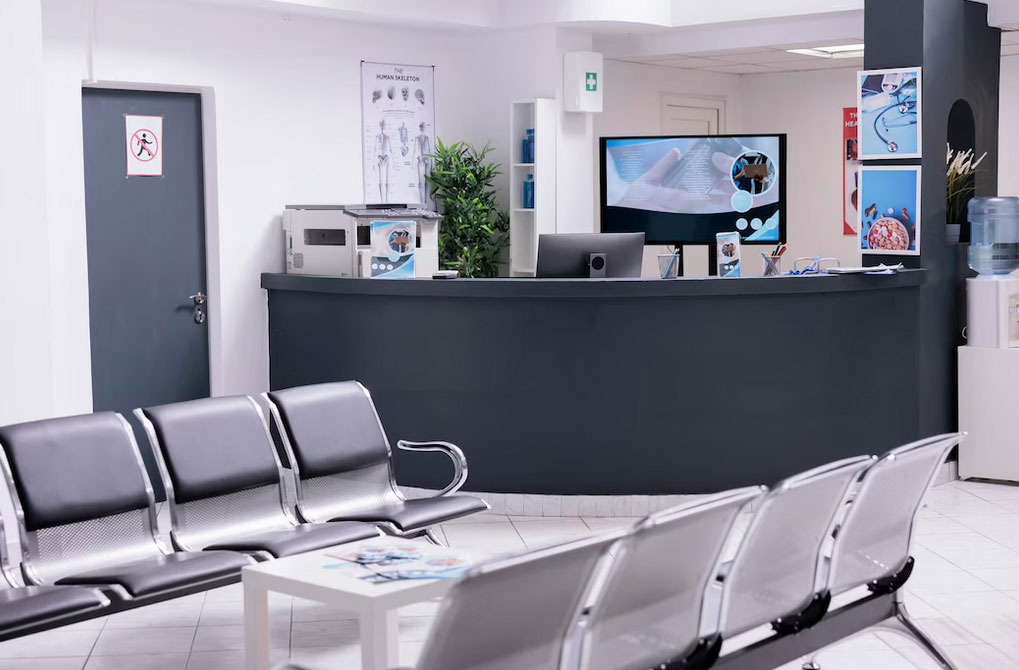
Reception and Check-In Areas
The reception area forms a patient’s first impression of the practice. It may also contain some of the building’s most frequently touched surfaces.
Cleaning can include reception counters, check-in stations, doors, interior glass, seating, floors, tables, and other surfaces that patients encounter when entering the facility.
Care must be taken around computers, paperwork, patient sign-in materials, card readers, and other equipment.
Waiting Rooms
Waiting rooms may experience constant turnover, particularly in urgent care centers, pediatric practices, dental offices, and high-volume medical clinics.
Services may include cleaning floors, chair arms, tables, doors, touchpoints, window ledges, and other furnishings. Children’s areas, refreshment stations, and shared items should be addressed in accordance with facility policy.
Examination and Treatment Rooms
Exam rooms require a clear division of responsibilities between clinical staff and environmental cleaning personnel.
A cleaning provider may be responsible for floors, sinks, counters, cabinet exteriors, doors, touchpoints, and other environmental surfaces. Clinical staff may retain responsibility for examination tables, instruments, medications, treatment equipment, and specialized devices between patients.
Those responsibilities should be documented before service begins. Cleaning personnel should never guess whether they are permitted to move, clean, or disinfect medical equipment.
Restrooms
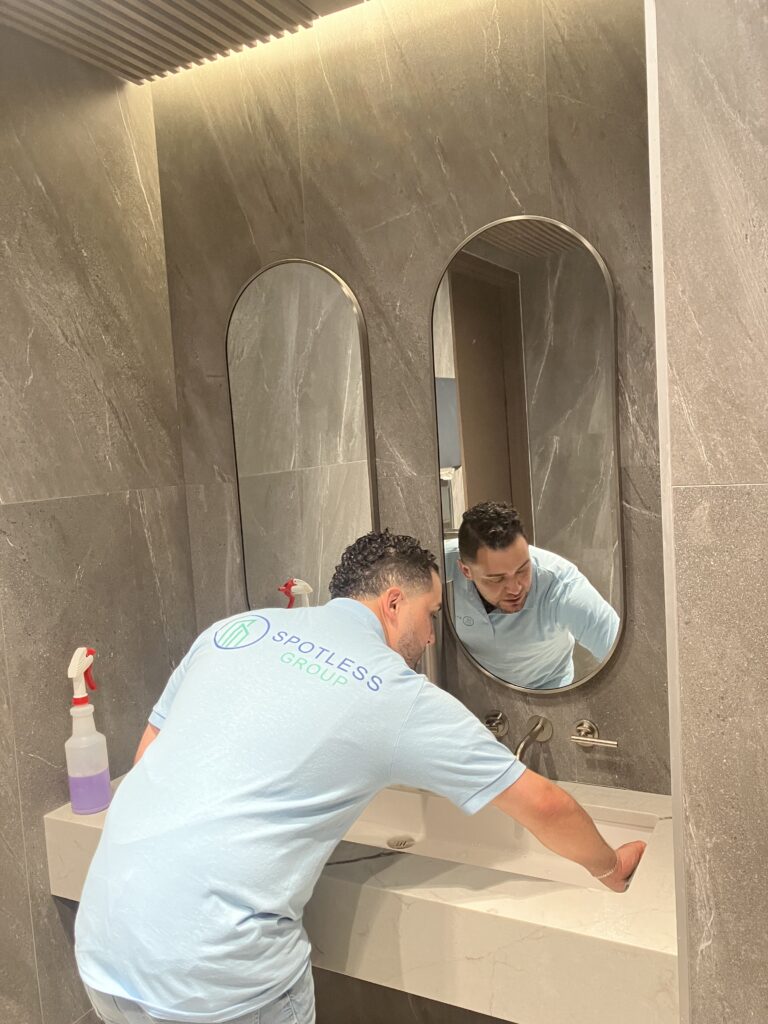
Healthcare restrooms require thorough, consistent attention because they are high-use environments with numerous touchpoints.
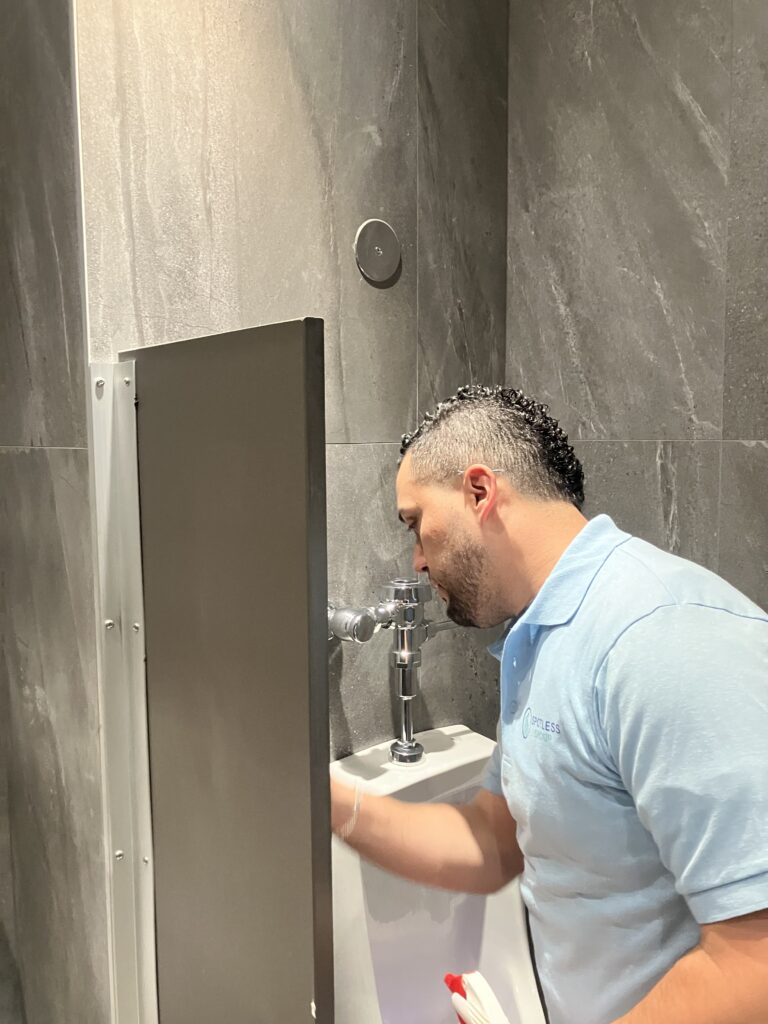
Cleaning may include toilets, urinals, sinks, faucets, partitions, dispensers, door hardware, mirrors, floors, and waste containers. Restroom tools should remain separate from those used in exam rooms, offices, and reception areas.
Administrative Offices
Administrative areas may look similar to conventional office space, but cleaners must remain alert to patient records, appointment information, insurance paperwork, prescription materials, computer screens, and other confidential information.
Workstations should be cleaned only in accordance with agreed procedures, especially when paperwork or electronic devices are present.
Staff Areas and Breakrooms
Shared staff areas can include tables, counters, sinks, refrigerators, microwaves, cabinet handles, and other frequently touched surfaces.
These spaces should be incorporated into the cleaning schedule rather than treated as secondary areas.
Hallways, Entrances, and Common Areas
Entrances and hallways experience tracked-in soil, moisture, salt, debris, and constant foot traffic. Regular cleaning helps reduce slip risks, protect floor surfaces, and maintain a professional appearance.
Elevators, stair rails, doorways, lobbies, and shared building areas may also require routine attention.
Floors and Carpeting
Healthcare facilities often contain several flooring types, including resilient flooring, tile, carpet, concrete, and specialty surfaces.
A comprehensive program may include:
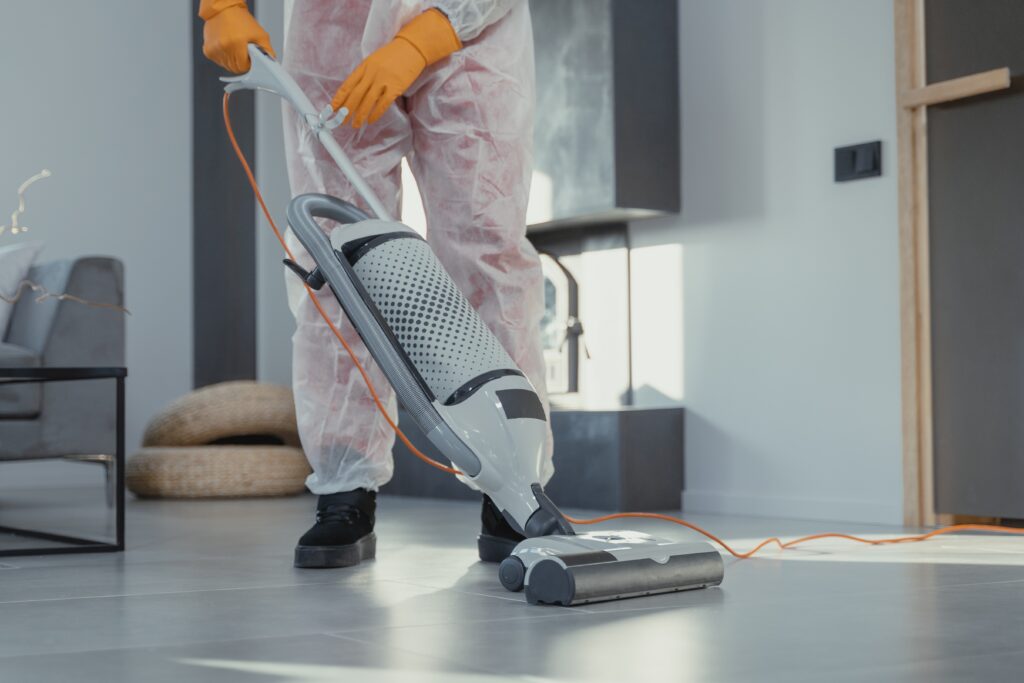
- Vacuuming
- Damp mopping
- Spot cleaning
- Carpet maintenance
- Floor scrubbing
- Periodic stripping and refinishing
- Burnishing
- Entry-mat care
- Spill response
- Restorative floor services
Floor-care products and methods should be appropriate for the material and the healthcare environment.
Healthcare Facilities That May Need Specialized Cleaning
Healthcare cleaning is not limited to hospitals. A wide variety of outpatient, clinical, rehabilitation, and professional medical properties may need specialized environmental cleaning.
Spotless Group can develop cleaning programs for facilities such as:
- Physician offices
- Dental practices
- Urgent care centers
- Outpatient clinics
- Physical therapy facilities
- Chiropractic offices
- Diagnostic centers
- Imaging facilities
- Specialty practices
- Behavioral health offices
- Rehabilitation centers
Ambulatory facilities - Medical laboratories
- Senior care properties
- Healthcare administrative offices
- Multi-tenant medical buildings
Each property presents different cleaning priorities. A dental office may have treatment rooms, sterilization areas, and specialized equipment. A physical therapy center may have open treatment spaces, mats, shared touchpoints, and exercise areas.
A diagnostic facility may have controlled rooms and equipment that cleaning personnel cannot touch without authorization.
The scope should always reflect the services performed in the building.
Sharps, Bloodborne Pathogens, and Regulated Medical Waste
One of the most important distinctions between ordinary janitorial cleaning and healthcare facility cleaning involves potential exposure to blood, sharps, and other potentially infectious materials.
Cleaning personnel should never reach blindly into waste containers, compress trash bags by hand, attempt to pick up exposed needles casually, or handle leaking regulated-waste containers without appropriate procedures.
OSHA’s Bloodborne Pathogens Standard includes requirements concerning contaminated sharps, protective measures, training, exposure-control procedures, and the disposal of regulated waste. OSHA has also stated that housekeeping employees in healthcare facilities may be exposed to bloodborne pathogens depending on their assigned duties.
Contaminated sharps must be placed in appropriate puncture-resistant, closable, leak-resistant, and properly labeled containers rather than disposed of in ordinary trash.
Before cleaning services begin, the facility and cleaning company should clearly establish:
- Who replaces sharps containers
- Who removes regulated medical waste
- Whether cleaners may handle red bags
- What to do when an exposed sharp is found
- How blood or bodily fluid spills are reported
- Which personnel are trained and authorized to respond
- What personal protective equipment is required
- How an exposure incident is handled
Unless cleaning employees are specifically trained, equipped, authorized, and contracted to perform regulated tasks, questionable materials should be secured and reported to the designated healthcare contact.
Protecting Patient Privacy
Medical office cleaners may work near patient charts, appointment schedules, computer screens, prescription information, laboratory paperwork, billing records, or conversations involving private health information.
The HIPAA Privacy Rule establishes national protections for medical records and other individually identifiable health information. Covered healthcare organizations are expected to use reasonable safeguards to protect that information from improper access or disclosure.
A cleaning company does not necessarily become a HIPAA business associate merely because its workers could have incidental contact with protected information. HHS explains that a business associate agreement is not generally required when the service does not involve using or disclosing protected health information and any access would be incidental.
However, cleaners must still act professionally and discreetly. Good practices include:
- Avoiding the reading or photographing of documents
- Never opening drawers or cabinets without authorization
- Not moving patient files unnecessarily
- Reporting exposed confidential material
- Avoiding conversations about patients
- Keeping doors secured as directed
- Following access-control and key-management procedures
- Cleaning computer screens or workstations only when authorized
Healthcare facilities should also avoid leaving sensitive records exposed in areas that are expected to be cleaned by outside personnel.
Consistency and Quality Control Matter
A medical office cleaning program should not rely entirely on a single cleaner remembering what needs to be done. Written expectations are essential. Without a defined scope, one person may disinfect a surface that another employee overlooks.
Exam rooms may receive inconsistent attention, restroom responsibilities may be unclear, or staff members may assume the cleaning company is handling tasks that actually belong to clinical personnel.
A strong healthcare facility cleaning program may include:
- A written scope of work
- Room-specific cleaning specifications
- Defined service frequencies
- Approved products
- High-touch-point checklists
- Restricted-area instructions
- Quality inspections
- Service logs when appropriate
- Procedures for reporting concerns
- A designated facility contact
- Periodic scope reviews
Quality control should evaluate more than whether the building looks clean. It should determine whether the agreed procedures are consistently being followed.
Cleaning requirements may also change over time. Patient volume can increase, rooms may be repurposed, new equipment may be installed, operating hours may change, and seasonal illnesses can create additional demands.
Daytime and After-Hours Healthcare Cleaning Services
Medical offices can schedule cleaning during the day, after closing, or through a combination of both.
After-Hours Cleaning
After-hours service may allow cleaning personnel to work through reception areas, offices, hallways, and common spaces with fewer interruptions. It can also reduce the need to clean around patients and staff.
However, restricted rooms, active procedures, alarm systems, access controls, and confidential materials must be carefully addressed.
Daytime Cleaning
Daytime cleaning or day porter support can provide continued attention to entrances, waiting rooms, restrooms, spills, waste containers, floors, and high-touch areas while the facility is operating.
Daytime cleaners must be especially professional and discreet because they work around patients, providers, staff members, and visitors.
Combined Service
High-volume healthcare facilities may benefit from daytime maintenance combined with a more comprehensive evening cleaning program.
The best schedule depends on patient traffic, building access, operating hours, available storage, noise restrictions, and the level of cleaning required.
Creating a Customized Healthcare Facility Cleaning Program
A healthcare cleaning program should begin with an evaluation of the property rather than a generic price based only on square footage.
Important considerations include:
- Type of healthcare facility
- Services performed
- Number and type of rooms
- Patient volume
- Hours of operation
- Building occupancy
- Flooring and surface materials
- High-touch areas
- Restricted locations
- Approved chemicals
- Waste-handling responsibilities
- Daytime and after-hours needs
- Security procedures
- Privacy expectations
- Seasonal cleaning demands
- Periodic floor and carpet care
- Documentation requirements
The resulting scope should specify what will be cleaned, how often service will occur, which products will be used, which tasks are excluded, and who is responsible for addressing unusual conditions.
This level of detail protects both the healthcare provider and the cleaning company.
Medical Office and Healthcare Facility Cleaning Across North Jersey
North Jersey is home to a dense network of physician practices, dental offices, urgent care centers, outpatient clinics, rehabilitation facilities, diagnostic centers, medical buildings, and specialized healthcare providers.
Spotless Group provides:
- Bergen County NJ Medical Office and Healthcare Facility Cleaning
- Hudson County NJ Medical Office and Healthcare Facility Cleaning
- Passaic County NJ Medical Office and Healthcare Facility Cleaning
- Essex County NJ Medical Office and Healthcare Facility Cleaning
- Morris County NJ Medical Office and Healthcare Facility Cleaning
Our team serves communities such as Paramus, Hackensack, Englewood, Jersey City, Hoboken, Clifton, Wayne, Newark, Montclair, Parsippany, Morristown, and surrounding areas.
North Jersey healthcare facilities operate in a wide variety of environments. Some occupy large medical campuses or multi-tenant professional buildings, while others are located along busy downtown districts and commercial corridors.
Parking access, building hours, shared common areas, elevators, patient traffic, and property-management requirements can all affect how cleaning services are scheduled and delivered.
Spotless Group works with each client to develop a program tailored to the facility rather than applying the same cleaning plan to every location.
Why North Jersey Healthcare Facilities Choose Spotless Group
Medical offices need a cleaning partner that understands the importance of consistency, communication, discretion, and carefully defined responsibilities.
At Spotless Group, we create customized cleaning programs based on each facility’s layout, schedule, operations, and priorities. We coordinate with practice managers, property managers, and facility administrators to identify high-touch areas, approved products, service frequencies, restricted spaces, and quality-control expectations.
Depending on the property, services may include:
- Recurring medical office cleaning
- Healthcare facility cleaning
- Janitorial services
- Restroom cleaning and disinfection
- High-touch-point cleaning
- Reception and waiting-room cleaning
- Administrative office cleaning
- Floor and carpet care
- Day porter support
- After-hours cleaning
- Customized periodic services
Clear communication ensures that cleaning responsibilities can be updated when patient volume, staffing, room use, or facility needs change.
Reliable Service
We show up, follow the plan, and maintain consistent standards every visit.
Customized Plans
Cleaning programs built around your building, schedule, and priorities.
Flexible Scheduling
Evening, after-hours, daily, or weekly. We work around your operations.
Clear Communication
A dedicated point of contact who understands your facility's needs.
Experienced Crews
Professionally trained teams with commercial cleaning experience.
Multi-Location Support
Capable of servicing single facilities or large multi-location organizations.
Create a Cleaner, More Professional Healthcare Environment
Medical office and healthcare facility cleaning requires more than routine dusting, vacuuming, trash removal, and restroom care. It calls for a structured program that addresses high-touch surfaces, patient-facing spaces, cross-contamination prevention, appropriate disinfectant use, privacy, safety, and clearly divided responsibilities.
When cleaning procedures are documented and performed consistently, they can support a healthcare facility’s broader goals for cleanliness, professionalism, patient confidence, and day-to-day operations.
Contact Spotless Group to discuss your medical office, outpatient facility, healthcare building, or specialized practice and request a commercial cleaning program tailored to your facility’s operations.
Proudly supporting medical offices and healthcare facilities throughout Bergen, Hudson, Passaic, Essex, and Morris counties in North Jersey and nearby Southern New York communities.